
Author
Jeremy Archer
Branch
Royal Air Force
Personal Stories
On Friday 9 May 2025, during the break between the Ladies’ and the Gentleman’s Varsity Matches at Lord’s, I fell into conversation with Bob Barker, a retired policeman who has been a Pavilion steward since 2017. In the way of these things, we soon established common ground and Bob showed me a photograph of his 102-year-old father, whom, to my delight and surprise, was wearing a Burma Star. Bob told me that, after a little gentle persuasion from the family, his father had put a few wartime reminiscences on paper although, having moved into a care home a few months ago, it would no longer be possible for me to interview him. What follows is therefore largely extracted from his father’s notes.
Maurice Alfred Barker was born on 2 October 1922, second son of William Alfred Barker, harness maker and saddler, of 1 Queen Street, Great Oakley, near Harwich, Essex and his wife Emily Ruth Winifred, daughter of Frederick John Barker, packer of continental goods and later a carpenter with the Great Eastern Railway, of 50 West Street, Harwich. Educated at the village school until he was 14, he then became a telegram boy at the Post Office: "Before and during the war, villages were close communities where everybody knew each other, or at least knew of each other. They knew where each other lived and their occupations, considerable interest being paid in any changes: births, deaths, people moving in or out of the village or people changing their means of employment. When war broke out in September 1939, there was great concern over how everyone would be affected in all respects. There was a keen interest in who was ‘called up’ to the forces and when men received their call-up papers, with people saying, ‘He’ll be going.’ A few months before the outbreak of hostilities, there was compulsory registration for men aged 20 and over, which meant that two of my cousins had to register. I was nearly 17 when the war started and the rules must have changed as I had to register on or after my nineteenth birthday, which I did at the Employment Exchange in Harwich. There was a considerable time lapse between my registration and call-up; some were thinking, if not saying, ‘When is he going?’
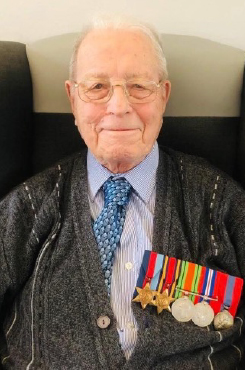 "I think it was a Tuesday when I eventually got the ‘apprehensive (distinctive) envelope’, with mandatory instructions to report to Cardington, Bedfordshire on 1 September 1942. It was soon known in the village and I overheard one lady tell another: ‘He is going next Tuesday.’ At Cardington, I spent a week being kitted out before we recruits were sent to Skegness for drill training – square-bashing – and rifle handling. In the servicing and maintenance of aircraft, there were a number of different trades: engines, airframes, electricians, instruments, armament and photography. After aptitude tests and an interview at Cardington, it was suggested I worked on airframes. After six weeks at Skegness, I was posted to Snodland in Kent, which was vastly different to Skegness. We were based at a dirty and dusty disused cement works, which acted an ammunition dump for local operational air bases, such as West Malling. The accommodation was good, though. Along with another lad whom I had met through church, I was billeted in a local private house with a very caring couple; the lady even wrote to my mother. Although I was only there for a month or so, we got to know some chapel people and the minister was very kind to us. Our duties were pretty basic: from loading ammunition to general cleaning.
"In late November that year, I was posted to St Athan [the southernmost point of Wales, slightly west of Cardiff] for a three-and-a-half month-long course on aircraft maintenance. We were only allowed one weekend pass: it was my sole visit home between joining up and my embarkation leave. It was a foregone conclusion that I would be posted overseas. Prior to embarkation, I had nine days’ leave at the end of March, from Thursday to the following Saturday. Did all concerned put on a ‘brave face?’ I really can’t remember now. Most households endured the same uncertainty, with relatives going abroad, either to the Near East or the Far East. The potent and forceful thought would always prevail: ‘Will they return?’ I cannot recall anything specific being said to me, only to wish one well and undoubtedly God’s blessing. My mother was very upset on the Saturday morning when I left. My father arranged for a taxi to take us to Thorpe-le-Soken station and he helped me onto the train. Having endured such terrible and life-threatening experiences in the previous war [during which he served with the Labour Corps and the East Surreys and was shot in the buttocks on 12 September 1917], his mind must have been in a turmoil and feeling very anxious; thankfully I was not aware of it.
"Having spent almost a fortnight at the transit camp at West Kirby on the Wirral, where I was kitted out for overseas service, we eventually set sail in the troopship, Highland Brigade, from Liverpool on 14 April 1943. Although we weren’t allowed ashore at Freetown, Sierra Leone, we spent five weeks at Durban, a highlight of my time overseas. The welcome given us in South Africa was tremendous: cars lined the docks with people ready to greet servicemen. It was a Saturday morning when we disembarked. Early on the Sunday afternoon some of us, who had got to know each other through Christian fellowship on board ship, joined up with an open-air meeting in a main thoroughfare in the town centre. This was an introduction to five wonderful weeks of fellowship and sightseeing. In the Full Gospel Hall, there was a fellowship of hard-working and keen Christian people who really manifested the power of God. While I was there, I was baptised by immersion by the senior Pastor, Archibald Cooper. I believe it was Whitsun Sunday.
"What a shock to the system it was when we boarded the SS Strathaird to sail across the Indian Ocean to Bombay. As normal, I was violently seasick once we were out to sea. I remember an older RAF man, Tommy Spence, a Methodist local preacher, telling me as we left South Africa: ‘Things will not be the same in India.’ He was quite right, of course! I spent my 21st birthday in the Bay of Bengal, between Calcutta and Chittagong. Initially, I was with an advanced forwarding unit at Chittagong, before being posted to 27 Squadron at Agatarla, where we worked on Beaufighters. The Commanding Officer, Squadron Leader James Nicolson VC [who was awarded the only Victoria Cross of the Battle of Britain and the only one ever awarded to a member of Fighter Command] took the Beaufighter I serviced early one Sunday morning on a ‘mission’ or ‘sortie’ in the area of the Mandalay River. He came back terribly shot-up; the Japs had had a good go at him. His remark was, 'Sorry about your aircraft,' to which I replied, 'It doesn’t matter about the aircraft, at least you’re back safe and sound.’" Sadly, Wing Commander J B E Nicolson VC DFC died when the B-24 Liberator in which he was flying as an observer, caught fire and crashed into the Bay of Bengal.
Maurice continued: "I then went on a course in Quetta, for further airframe instruction. To my delight, I soon found Sandes Home, a Christian café with quiet rooms to read and relax. It was run by two elderly ladies, both of whom had been there at the time of the 1931 earthquake. They proved very beneficial to me while I was there, both from a spiritual and physical point of view. There was always a welcome at Sandes Home, which was their home and a canteen combined. In addition, I was fortunate to make contact with Lieutenant-Colonel Theodore Cooke, Royal Corps of Signals, a strong and sincere man of prayer who led Sunday morning services on our camp. Not long after I finished my course in Quetta, he was repatriated back to England. Although there was a considerable age difference between us, there was certainly a strong bond of Christian fellowship; so naturally we exchanged addresses in England with a view to keeping in contact. Colonel Cooke indicated he would be in contact with my parents when he returned to England. Some weeks later in a letter from home I learnt to my pleasant surprise that he had visited my parents in Great Oakley. To them it was an exceptional surprise, being a Wednesday afternoon when they were busy spring cleaning. Both parents were overcome at such a visit and naturally unprepared. Personally, it meant much that a Christian brother of such a spiritual calibre and ranking should find time to make the visit, which resulted in so much appreciation and spiritual uplift.
"After Quetta, I returned to the front-line, initially at Cox’s Bazaar and then at Ramree Island in the Bay of Bengal. Once I had completed the training, it gave me the opportunity to do maintenance work which was far more involved, routine inspections and periodic work, which each aircraft required after a certain number of hours’ flying. Occasionally, I assisted the engineering officer of 258 Squadron with office work. The Squadron was equipped with Republic P-47 Thunderbolts and operational activity was a daily routine which continued until peace was declared. Then we went to Arkonam [now Arakkonam] near Madras and subsequently to Yelahanka near Bangalore, to re-train and re-equip for the invasion of Singapore. Thankfully, this never happened because Japan surrendered. We were posted to Singapore, though, to Tengah, before going north to Kuala Lumpur. I attended a week-long Christian Moral Leadership course run by three padres at Penang, a lovely place further up country in Malaya. Due to some local trouble in Java, quite a number of us from 258 Squadron were posted to a unit there. We moved about in Java, even to Surabaya in the east. I even thought I was going to make it to Australia.
"The journey home began with a flight from Java to Singapore in a Dakota transport aircraft; I was violently bilious! A soldier who had been shot in the head and was being attended by a nursing officer died on route. I travelled home from Singapore to Southampton on an ageing Dutch ship. On this voyage I had the privilege to come through the Suez Canal, which was quite an experience; it appeared to be so narrow in places with so much to see on either side of the ship. On disembarkation were conveyed by train via London to a small transit camp in Hunsdon, Hertfordshire near Stanstead Abbotts: it really felt like home as they were cutting a wheat crop in the field next to the camp. From there we received the necessary checks and documentation to proceed to a month-long, much-anticipated disembarkation leave. My father, who met me with Uncle Arthur at Manningtree Station, said that he would not have recognised me if it had not been for my white teeth. I was brown and yellow due to the sun in Asia and the Mepacrin in malaria tablets which we were compelled to take while aboard. I had been abroad for three years and three months. I was finally demobbed in January 1947, at Fareham near Portsmouth. I did not lose any Post Office pension credits as the result of being on military service. As a general rule, the Post Office made up the difference between what I would have earned with them and my Royal Air Force pay."
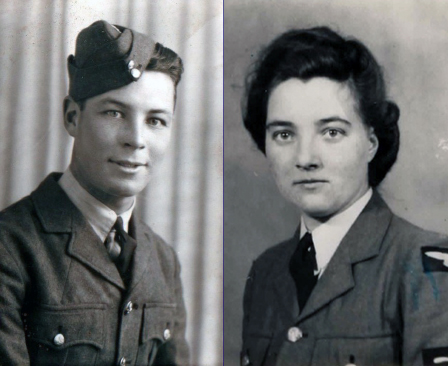
It was the posting to St Athan that changed the direction of Maurice’s life, though, because he met Joyce, the only daughter of Thomas Llewelyn Jones, timber sawyer, of 16 Brooke Avenue, Milford Haven and his wife Annie Maud, daughter of Edwin Henry Crossman, warehouseman. As Maurice explained: "I first meet Joyce, who was born just twelve days after me, on Christmas Day 1942. It was in the SASRA (Soldiers’ and Airmen’s Scripture Readers Association) hut, St Athan: they laid on a Christmas tea for those serving at the RAF station. Having also left school at 14, she worked in the office of a coal merchant in Cardiff until volunteering for the WAAF (Women’s Auxiliary Air Force) in July 1942. When we met, she was courting a flight engineer whose bomber was shot down on a mission while I was abroad. He was killed in action but I don’t know any other details. While I was overseas, I kept in touch with Joyce and we communicated by letter. When I came home, I visited St Athan on leave: we soon started courting and were engaged in January 1947. Joyce and I were married on 20 August 1947 at Macintosh Gospel Hall, Macintosh Square, Cardiff, with a reception in a restaurant in St Mary’s Street. The wedding was on a Wednesday as it was the best choice for both families because they were shopkeepers with Wednesday as half-day closing. We had just two days’ honeymoon in Gloucester." Maurice and Joyce, who lived all their married life in Dovercourt, Harwich had three sons: Philip, Bob and David. Bob remembers standing in front of the Great Oakley War Memorial with his father: "We went through those listed, he told me a little about most of them. I found it a very poignant moment." After Joyce died on 25 May 1998, Maurice remarried, on 1 May 2004 at Colchester Register Office, to Joy Rudd. Bob’s daughters were pleased and proud to say: ‘I went to my Grandad’s wedding.’ Maurice worked for the Post Office, in a variety of different roles, until retiring at the age of 60.