
Author
Helen Deakin
Branch
Army
Personal Stories
In February 2025, the Chindit Society received a family enquiry from Helen, who was interested in researching Pte George Smith, a relative who had served in Burma and who was possibly a Chindit. After an email correspondence with the Society’s historian Steve Fogden, it was determined that George had served with No. 74 Column (7th Leicester’s) on Operation Thursday, flying from the Lalaghat airfield in Assam into the Aberdeen stronghold aboard DC-3 Dakota FL 538 on the 28th March 1944.
One of the key research documents found for George Smith was his Burma Star Association membership form from the database online. George was a proud member of the Nuneaton Branch for many years, beginning in April 1954. As a consequence of her initial contact with the Society, Helen was inspired to find out more about the men of the Burma Star Association and in particular the Nuneaton Branch.
Over the last period, Helen has worked diligently in pulling together the following short history commemorating the branch from its inception in 1952 until it’s sad demise and closure in April 2000. Her article, which has taken many weeks to compile, paints a wonderful portrait of the men and women of Nuneaton and their determination to acknowledge their community’s service during the Burma campaign and to honour and care for those who fought there.
Comradeship After the Jungle: Burma Veterans Unite
In the spring of 1952, two Nuneaton veterans of the Burma campaign, Bill Fitton, manager of the Boot Inn, and Fred Day, an agricultural salesman, both former sergeants in the R.A.S.C., were invited by the Burma Star Association to consider forming a local branch. They accepted the task with a shared sense of purpose. They knew how many Burma veterans were scattered across the district with no formal meeting place or support of their own. What began as an invitation, quickly became a commitment to bring those comrades together, laying the foundations for a branch that would endure for decades.
Fred and Bill quickly rallied a handful of comrades who were just as keen to see a local branch established. Their inaugural meeting took place at the Boot Inn, Chilvers Coton on 1st May, at 8pm. It remained their headquarters until 1958. The turnout of 23 people from all 3 services was beyond expectation, with Bill Fitton extending the warm, friendly welcome he was known for. It was a clear sign there was support in the town for a branch of its own.
The branch welcome members from across the region, with men travelling in from Bedworth, Coventry, Hinckley, Northampton, Leamington and Kenilworth, knowing a warm welcome would await any Burma veteran who came through the door. It was never just a local club, but a natural meeting point for Burma veterans across the wider region.
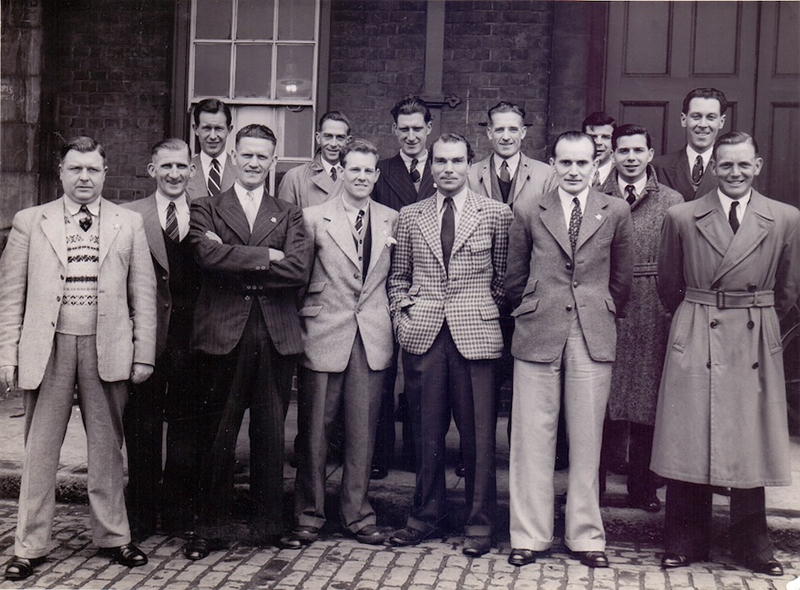
In a quiet twist of local history, the Boot Inn stood only yards from the birthplace of Chindit Pte George Smith, of the 7th Battalion, Royal Leicester Regiment, born at 19 Bridge Street in 1915. Just a month after their inaugural meeting a delegation of 18 holders of the Burma Star medal reserved an entire railway carriage. They journeyed together to the Royal Albert Hall for the annual reunion, amongst them was another Chindit, Norman Dodd of 1st Battalion, South Staffordshire Regiment. The image below remains one of the first clear glimpses of the branch as a group, united again in purpose and pleased to be travelling as one.
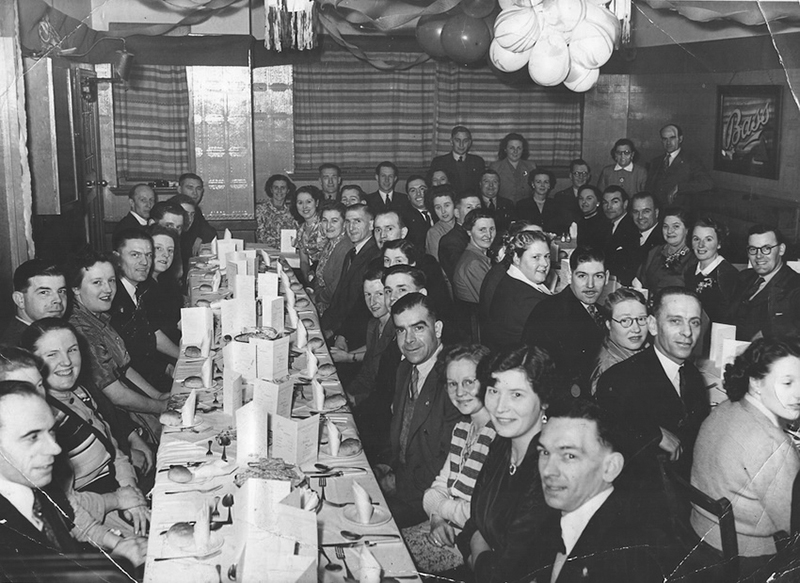
In addition to these two Chindits, a further 14 Chindits within the membership have been identified. Among them were 2 Chindits who received formal recognition for their service: W/ Cpl T Pickering awarded an Oak Leaf and Sgt Arthur Willshaw awarded the British Empire Medal, later an MBE. Their presence reflected the depth of Burma service within the branch and contributed greatly to its character. The new year opened with another milestone: the 1st annual dinner (pictured below), held at the Boot Inn on 16th January 1953,. Seventy members and guests sat down to a three-course meal in a room decorated with balloons in the traditional Burmese green and gold. The evening continued with music, dancing and light-hearted games. It was a warm, confident beginning for a branch not yet a year old. Such was the enthusiasm among the Burma veterans and their guests that by 1955 the event had already moved to the Grand Masonic Hall, and the attendance continued to rise through the 1960s and into the 1970s culminating at around 200 guests.
The branch’s annual dinners later moved to the Pingles Hall, a decision shaped by the arrival of the new catering manager, Chindit John Driver. John had previously baked and decorated celebratory cakes for the branch, adding a personal warmth to these occasions. The branch welcomed a number of distinguished guests to their annual dinners, among them Alec St Pierre, National Welfare Officer, and Field Marshal William Slim, whose leadership in Burma and later founding of the Burma Star Association gave his visits particular significance to the men. Among the membership were three Burma veterans whose later achievements made them men of note in the community and added to the branch’s standing.They included Councillor Harry Rowston, the Mayor of Nuneaton and formerly of the Royal Artillery with the rank of BSM and mentioned in dispatches; Major Les Marlow, who had served with the 2nd Battalion, the Green Howards and later with the 9th Australian Division (New Guinea) and who after the war rose to Chief Superintendent of Warwickshire Constabulary and head of the Nuneaton division; and Lieutenant J. E. Cooke of the R.A.S.C., who in civilian life became area manager for Petrofina (Fina Petrol Stations).
Quiet Welfare Work and the Burden Carried Home
Much of the branch’s strength rested in the quiet and practical work of the welfare officer who took responsibility for members’ welfare; It was a duty carried out by several men over the years, among them, Ted Wheway, Harold Deakin (Mick) and Fred Evans, who offered the steady support that the veterans needed. Their work touched every corner of branch life; helping members with social problems, those facing financial or housing difficulties, advising on welfare aid and pensions, visiting the sick and housebound and assisting families in securing nursing care when it was needed.
The veterans of the Burma Campaign faced even greater hardship than their European comrades. The atrocious conditions they fought in, the oppressive humidity, constant exhaustion and long periods of malnutrition left lasting marks on body and mind; while those who fell into captivity endured even harsher suffering through forced labour, disease and inhumane treatment. These experiences left many with lifelong damage to their health and with psychological scars and burdens seldom spoken of, understood only by those who had shared the campaign; in the words of one family, he came home a broken man.
When one ailing veteran was finally allocated a council house, the branch came together in the way they so often did. Syd Thorpe, flower show secretary, along with several other members, dug and planted out his new garden, vegetables at the back for usefulness and flowers at the front for pride. It was the sort of quiet, practical help the branch excelled at. Within months the veteran's health deteriorated sharply, and the welfare officer stepped in to oversee the care he needed. With the NHS still in its early years and long-term nursing care difficult to obtain, acting on behalf of the branch, he secured the man a place in a Group Captain nursing home in Ampthill. It was a lifeline that would not have been available without the welfare officer.
The welfare work so relied upon in those early years, was supported by a steady stream of local fund-raising events. Among the most successful was the annual flower and vegetable show, first held in 1953. Run by a small sub-committee under the guidance of the show secretary Syd Thorpe, the Show Secretary, it was a two-day event held each September and brought together many fine vegetables and flowers grown by branch members. From the outset it faced friendly competition from five other organisations, and this wider interest helped the show gain credibility. By 1957 it was attracting outside exhibitors, including Mr A. Bugden, who had taken first prizes at the National Chrysanthemum Society’s show in London.
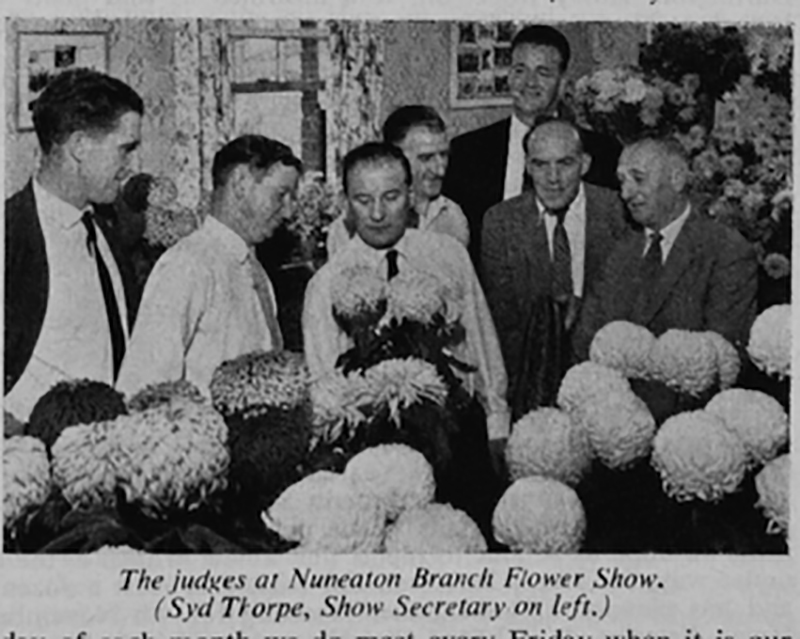
Competitors competed for an array of trophies, including the Fred Evans Challenge Cup for most overall points obtained by an exhibitor, and the popular gardening cup for the best display. The Challenge Cup had been donated by Fred Evans, who later established his own garden nursery. Once judging and the awarding of trophies had taken place, the blooms were auctioned by the chairman, the genial Bill Fitton, who continued as auctioneer until 1962. The public, impressed by the quality of the produce and blooms, bid keenly to secure them, with the proceeds going directly into the welfare fund. Pictured are the judges at the Nuneaton Branch Flower Show, with Syd Thorpe (Show Secretary) seen on the left of the photograph (image Dekho magazine).
Alongside the main branch, an independent Ladies’ Section flourished between 1952 and 1959. They organised their own social events, arranged garden fêtes, dances, rummage sales; and provided the catering for the annual birthday parties, producing the grand spreads that became a hallmark of those early celebrations. They also took charge of the children’s Christmas parties and other occasions like game nights, producing the grand spreads that became a hallmark of those early celebrations. They also took charge of the children’s Christmas parties and the summer outings to places such as Wicksteed Park and Chipperfield’s Circus. One cherished tradition was the distribution of Christmas parcels packed by the ladies’ section containing seasonal treats and practical goods and given to the housebound, the sick and those in need of practical assistance; a simple gesture to remind veterans that they had not been forgotten. This was only made possible by the fund-raising efforts of the members, and this type of welfare work would remain at the heart of the branch throughout its life.
In addition to their event work, the Ladies’ Section produced goods to sell at their fêtes and galas, including jams, marmalades, pickles, chutneys and a variety of handmade items, such as baby clothes, dresses, dungarees, pinafores, peg bags and other knitted and crocheted items, all of which helped raise steady funds for the branch. Although they ceased to operate as an independent group in 1959, the ladies continued to organise the branch’s events and fundraising activities, maintaining the steady support they had given throughout the decade. When they concluded their work as an independent group, they handed over £30 to the branch, roughly £900 in today’s terms, a final gesture of the commitment which they had shown from the very beginning.
Dedication of the Standard
The branch dedicated its new standard, beautifully crafted by the Ladies’ Section, on 13th September 1953 at Chilvers Coton Church, where the vicar conducted a service in a church that was packed to capacity. Members of the Birmingham branch attended, together with representatives of the British Legion, Royal Navy and Royal Air Force Associations.
After the service the veterans formed up on the roadway and Battery Sergeant Major Frank Evans stepped forward with the standard. He ordered the men to fall in and stand to attention. At the command to step off, the left foot strikes the floor first, the men move forward behind the standard, settling quickly into a natural 120 pace rhythm. Veterans of the Army, Navy and RAF marching together as one body, as they made their way back to their headquarters at the Boot Inn; where Lieutenant Colonel Stafford took the salute. After the salute is taken, the men make their way back inside, where a simple buffet prepared by the ladies awaits them, along with a pint of Bill Fitton’s finest ale. The Birmingham branch, with whom they had formed a close bond, marked the occasion by presenting the Nuneaton branch with an Association badge mounted on a plaque, which was proudly hung in the headquarters club room.
The new standard quickly became the heart of the branch’s identity, a source of pride and a symbol of honour and remembrance for all who had served in the Burma campaign. It was carried at Remembrance and Armistice Day services, civic ceremonies and was proudly hung over the balcony at the annual national association reunion at the Albert Hall, and most meaningfully at the branch’s own VJ Day parades, with the 15thAugust holding deep significance as the date of Japan’s surrender in 1945. Whenever a member passed away, the branch ensured they were honoured in the traditional custom: the Union Jack draped the coffin, which in the early days was carried by the branch members, the standard bearer lead the procession with the standard, branch members formed a line of respect as the coffin passed, and the service concluded with the Last Post and the Rouse sounded by a bugler.
The branch also maintained close ties with other Burma Star groups, making two notable weekend trips to the Cambridge area - one to the RAF station at Waterbeach for the air show and another for the Association’s Conference weekend. These journeys were made in the days before motorways and modern air-conditioned coaches, and the small vehicles hired for such trips were not always reliable, breaking down on occasion. Yet the men travelled wherever they were needed, whether to events across the Midlands or further afield, to Wales, Scotland and even the Isle of Wight. Their standard was also carried to national reunions at the Royal Albert Hall, a testament to the branch’s commitment to the wider Burma Star family.
Long before the branch was formally established, many of the Burma veterans were already familiar sights at civic ceremonies. The rededication of the Riversley Park War Memorial on 11th June 1948 was a major occasion for the town, and several of the Burma men were among the large crowds who gathered to witness the unveiling of the new inscriptions. Field Marshal Viscount Montgomery arrived in his famous Humber car and was seen in Church Street before taking the salute from the steps of the Council House. Deafening cheers greeted him as he walked through the crowds lining Coventry Street and Coton Road on his way to Riversley Park. There he inspected a Naval contingent and made a short speech in which he referred to his long association with Warwickshire, having been commissioned into the Royal Warwickshire Regiment as a young officer. He then unveiled the new inscriptions on the memorial, after which the Last Post was sounded.
For all the challenges they faced, there was no shortage of humour and camaraderie. At the branch’s fourth annual dinner, the tradition of cutting the birthday cake with a ceremonial Japanese sword owned by Ted Wheway was continued, with the honour this year bestowed on Francis Xavier Jacobs, a Burmese national who had served in both world wars, first as a private in the First World War and later as a corporal during the Burma campaign in the second. He left Burma during the wartime trek in 1942 and eventually settled in Nuneaton in 1948, making his long record of service and endurance especially fitting for the occasion. Each year, the tradition and honour of cutting the birthday cake was given to a respected member, someone who had held a special place within the branch at that time.
VJ Day in Nuneaton, 15th August 1954
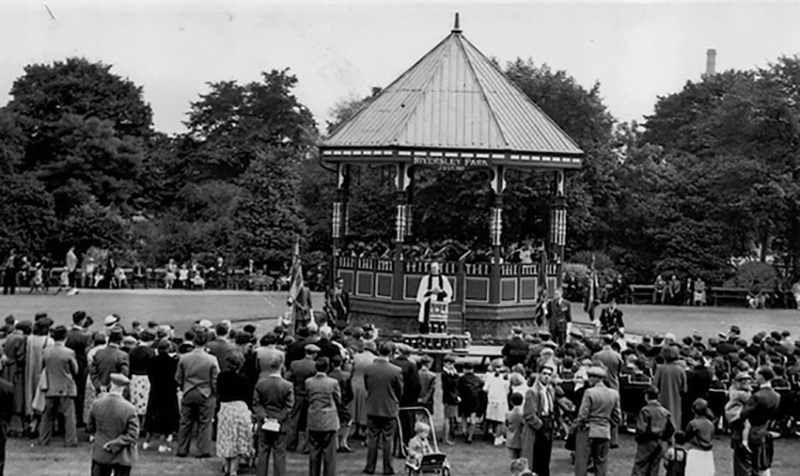
Nuneaton’s VJ Day commemorations in 1954 carried special significance for the newly formed Burma Star branch, marking both their first independent parade and the first public appearance of their new standard. The contingent was led by standard bearer Frank Day, B.S.M. formerly of the 7th Battalion Royal Artillery, an honour he would hold for only a short time because of illness. With Fred giving the order to line up and march, the men proudly stepped out through the town to the Council House where civic dignitaries were waiting to take the salute. In the time-honoured tradition, the streets were lined with men, women and children waving Union Jack flags, cheering and clapping as the Burma Star men marched past. Once the salute had been given, the dignitaries fell in behind the column as it made its way into Riversley Park for the main act of remembrance. There, the Reverend Rigby conducted a traditional drumhead service, with the drums stacked in front of him and the Leicestershire 4th Corps of Drums providing the musical accompaniment that gave the ceremony its distinctive military character. After the service, the parade moved to the nearby war memorial for a wreath-laying in honour of those who did not return from the Burma campaign. With the formalities complete, the veterans and dignitaries continued on to The Boot Inn, where the branch’s ladies had prepared a lunch and arranged entertainment.
Design a seat winners 1954
The Nuneaton Borough Council invited local groups to submit designs for a bench for the memorial garden, and the Nuneaton branch of the Burma Star Association responded. Their design was the one the council chose for the project, and a surviving photograph (below) shows branch members standing proudly behind the completed seat.
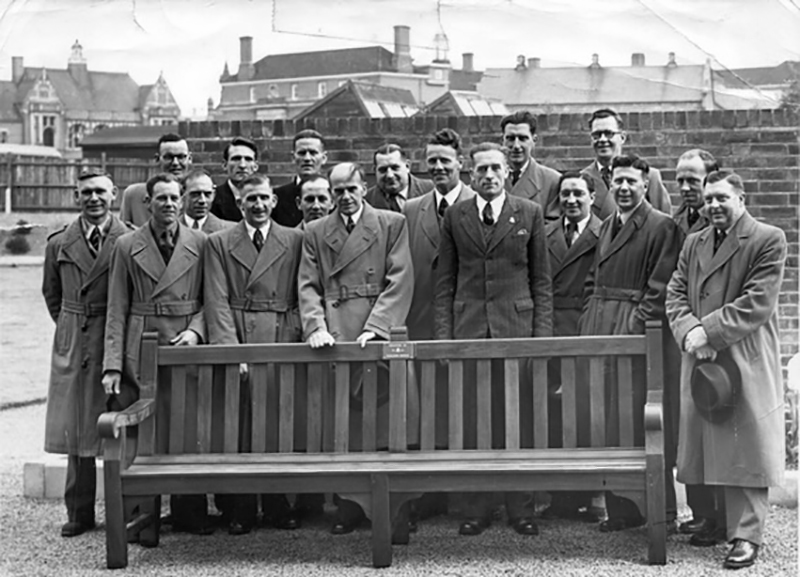
The same pattern was still in use years later, and in June 1962 a teak bench made to this design was presented to the new Coventry Cathedral and dedicated in the Cathedral grounds by the Provost, the Very Reverend H. C. N. Williams.
The branch moved their headquarters to the White Lion in Stockingford in 1958. The chairman’s sister Minnie Davenport nee Fitton and her husband had offered the branch a club room for their meetings and as a venue for their annual flower show. The invitation seemed almost fated. The invitation seemed almost fated. The Chindits had marched under the Chinthe, the lion-guardian of the Burmese pagodas and now their headquarters stood beneath an English lion swinging above a pub door. They set about refurbishing their room with typical enthusiasm, redecorating and installing what they proudly called a “first-class bar.” It did not go unnoticed that the branch, whose badge featured a mythical lion, had found a home in a pub of the same name. From then on, the familiar reminder became part of branch life: “Don’t forget, Friday night at the Lion is Burma night.” They showed their appreciation by holding their annual dinner there that year.
The early decades of the branch were shaped by strong personalities, and the branch were saddened by the death of Frank Herbert Evans age 47 in 1956 following a long illness. Frank was a founder member who had served in the Nuneaton police, and as the branch standard bearer, vice chairman, and area representative. He was a man of character with a ready sense of humour who lived for the association and wanted only the best for it.
The branch suffered a great loss in December 1963 with the untimely death of founder member Bill Fitton, its first Secretary, later Chairman and long-standing host at the Boot Inn. Aged only 45, he had been central to the branch’s formation, giving his time, energy, and hospitality to ensure it took root and flourished.
In 1972 the branch bore the loss of another founder member with the death of Frank Day aged 59. Frank had been a presence from the earliest years and had been elected to carry the standard when Frank Evans had resigned his role due to illness. His passing marked the end of another link with the branch’s beginnings and reminded members how much of its strength had come from the commitment of these original members. Their loss was deeply felt by the branch and left gaps that could not easily be filled.
In the 1960s, the Midlands Area Committee adopted the practice of rotating the annual VJ Parade between the various districts, ensuring that each branch had the chance to act as host and that the event remained representative of the whole area. On the Sunday morning of the 19th August 1962, Nuneaton hosted the VJ Parade, welcoming six of the Midlands other branches. After the ceremony the branches received a warm welcome back at the White Lion where a lunch had been prepared for them.
The branch marked its 25th Anniversary with a well-supported celebration attended by 173 members and invited guests. Among those present were Alec St Pierre, Councillor Ron Walker (the Mayor) and the Mayoress - Iris Walker. Before the anniversary dinner, Alec St Pierre and his wife, Caroline, were received in the Mayor’s Parlour by Councillor Ron Walker, himself a member of the Nuneaton branch. This courtesy call set a formal tone for the evening and reflected the regard in which the branch and its guests were held. The occasion reflected the standing the branch had earned over a quarter of a century and the continued goodwill it enjoyed from civic figures and friends of the Association.
In 1977, the Nuneaton branch suffered a serious setback when a fire at the White Lion destroyed their club room and many of their belongings, including a signed photograph of Earl Mountbatten and the late Field Marshal Slim. The loss was deeply felt, but the branch was spared a further blow as the standard happened to be at the home of the Standard Bearer that night. The incident was reported in the first 1978 national report, marking it as one of the more severe misfortunes faced by a Burma Star Association branch during that period. The fire prompted a move from the White Lion to the Fife Street Working Men’s Club though their stay there proved brief. After four years the branch moved again, relocating in 1982 to the Ex-Servicemen’s Club on Coton Road, where the veterans met on the first Wednesday of the month at 8pm. The familiar rhythm of committee meetings, shared news and the easy camaraderie of old friends soon returned. Set directly opposite Riversley Park and only a short walk from the memorial garden and the Council House where the salute had been taken, the new venue placed the Association at the very heart of Nuneaton’s civic and commemorative life.
One thing that had always stood out, was the bond that had been forged during the perils of war, long before the branch existed, when its members had been united on the battlefield in a desperate struggle against the brutalities of dictatorship. In the years that followed, that same comradeship endured, carrying on into peacetime as they supported and comforted those whose health, circumstances and experiences had been less kind. It became a shared strength that belonged to the whole branch, members and families together, reflecting the best traditions of family life and sustaining the branch across the generations.
40th Anniversary of the Nuneaton Burma Star Association (1992)
The Nuneaton Burma Star Association marked its 40th anniversary with a well-attended annual dinner on Saturday 9th May 1992, bringing together more than one hundred guests for an evening of companionship and recognition of four decades of branch life. Entertainment was arranged for the occasion, adding to the sense of celebration and pride shared by all who gathered. To honour both the anniversary and the 40th VJ parade, the local authority created a floral display of the Burma Star emblem, planted with sedum, French marigolds and red salvia. Its presence offered a striking summer tribute to the men and women who had served in the Burma campaign and stood as a reminder of the town’s enduring respect for their service and sacrifice.
The anniversary dinner became a moment not only to look back with gratitude, and reflect on their achievements, but also to recognise the ongoing commitment that kept the Association’s spirit alive. It was, by every measure, a happy and memorable day. Only a small number of veterans remained by 1992, but on that day, they resolved to keep the branch’s spirit alive, welcome new members, maintain its active role in the community and attend civic ceremonies albeit allowing for age and availability.
In the years that followed, as the branch members became too frail to carry the standard, the branch entrusted the carrying to Steve Hyde of the Parachute Regiment, who was made an honorary member for that purpose. He undertook the role with the same steadiness expected of a wartime veteran, carrying the standard on behalf of the dwindling branch for more than a decade, until either the branch’s closure or the passing of its last member would bring his duty to an end.
In 2019, a photograph was taken at the Bedworth Armistice Day parade showing possibly two Nuneaton Burma Star veterans being pushed in their wheelchairs in the green and red berets. They may have been the last surviving members of the branch to attend the parade and his presence that day carried a quiet significance. Though frail, they remained determined to honour their comrades and the sight of them taking their place in the procession was a reminder of the long thread of service that stretched back to the Burma campaign.
Disbanding of the branch
A lifetime of devotion to the comrades who never returned and to those who came home with life-changing problems, had always been at the heart of the Nuneaton branch. As the years passed and numbers inevitably declined, the future of the Burma Star Association moved towards its final chapter. The National Burma Star Association had already advised all remaining branches to close their bank accounts by the 15th August 2020 as part of the arrangements for its own winding up. The National Association was formally disbanded on the 15th August 2020, the seventy-fifth anniversary of VJ Day. On 3rd April 2020 the Nuneaton trustees took the difficult but unavoidable decision to bring the branch to a formal close, a decision that aligned with the timetable set by the National Association and coincided with the death of the branch’s last member. Both closures were taken with regret but with a clear sense of responsibility, ensuring that Nuneaton’s legacy would be preserved with dignity.
Remembrance Sunday 2020 – Final Journey of the Standard
Remembrance Sunday fell on 8th November 2020, and it was on that quiet morning that the Nuneaton Burma Star standard began its final journey, bringing to a close more than seven decades of the branch’s presence in the town. A full parade cancelled under Covid-19 restrictions. At 11.05am the town crier, Paul Gough, delivered the Call for Peace at the Town Hall. On that day Steve Hyde carried the Nuneaton Burma Star Association standard for the final time. It was proudly carried behind the Union Jack and the Royal British Legion Standard with an escort of former Paras. It was brought to the cenotaph in Riversley Park and after the short ceremony the commanding officer of 30th Signal Regiment then received the standard from Steve Hyde and presented it to the Gurkha contingent with a serving Gurkha escort. It was then taken by the Gurkha contingent into the Gurkha Club on Coton Road, formerly the Ex-Servicemen’s Club and the branch’s final headquarters: allowing the standard to come to rest in the place the Association had last called home.
Its final resting place reflected the wishes of the branch’s last member, who asked that it should not be placed in a church but entrusted to the Gurkhas, recognising that they too had served in Burma and would continue to care for it. Alongside the standard, the original branch folders and surviving memorabilia were made available for public viewing on Coton Road. There was no fuss and the streets were not lined as they would have been for a normal parade, yet the quietness of the day did not lessen the significance of the standard’s final journey.
Nuneaton-based Chindits
From her research into the men and women of the Nuneaton Branch of the Burma Star Association and using the BSA membership database and the Dekho magazine archive, Helen has been able to find the following men who served with the Chindits. There may of course be more. All those listed below served on Operation Thursday in 1944, unless otherwise stated. Most of the regiments listed are unsurprising when you think of Nuneaton and its geographical location, but there are some anomalies. The Chindit Society continues to build an archive of Chindit service and would be glad to hear from anyone in the Nuneaton or wider Midland’s area who can add further names to the list below.
Cpl Thomas Cole - 7th Leicesters
Pte Norman Dodd - 1st South Staffs
Cpl John Driver - 7th Worcesters, Chindit unit unknown.
Sgt John Gandley - 1st Lancashire Fusiliers
Cpl Harold Hodson - 1st South Staffs
Pte Albert John Hollis - 1st South Staffs
Sgt William Hood - 7th Leicesters
Pte Charles Large - 2nd Yorks & Lancs
Sgt Kenneth Measom - 7th Leicesters
Cpl Thomas Albert Pickering - 1st King’s Liverpool
Pte Ernest Scott - 2nd Leicesters
Pte George Smith – 7th Leicesters
Pte Walter Stretton - 7th Leicesters
Sapper Stanley Tonks - 12th Field Company RE
Sgt William Henry Ellis - 1st King’s Liverpool
Sgt (RAF) Arthur George Willshaw BEM - Brigade HQ, Operation Longcloth